The Phase 2 team is back in Shengze. The cartons from the booth are still stacked on the office floor, half unpacked. Inside are the silk samples that came off the displays, and a few color books handled so many times over four days that the corners have started to curl, some pages marked in pen by buyers comparing shades.
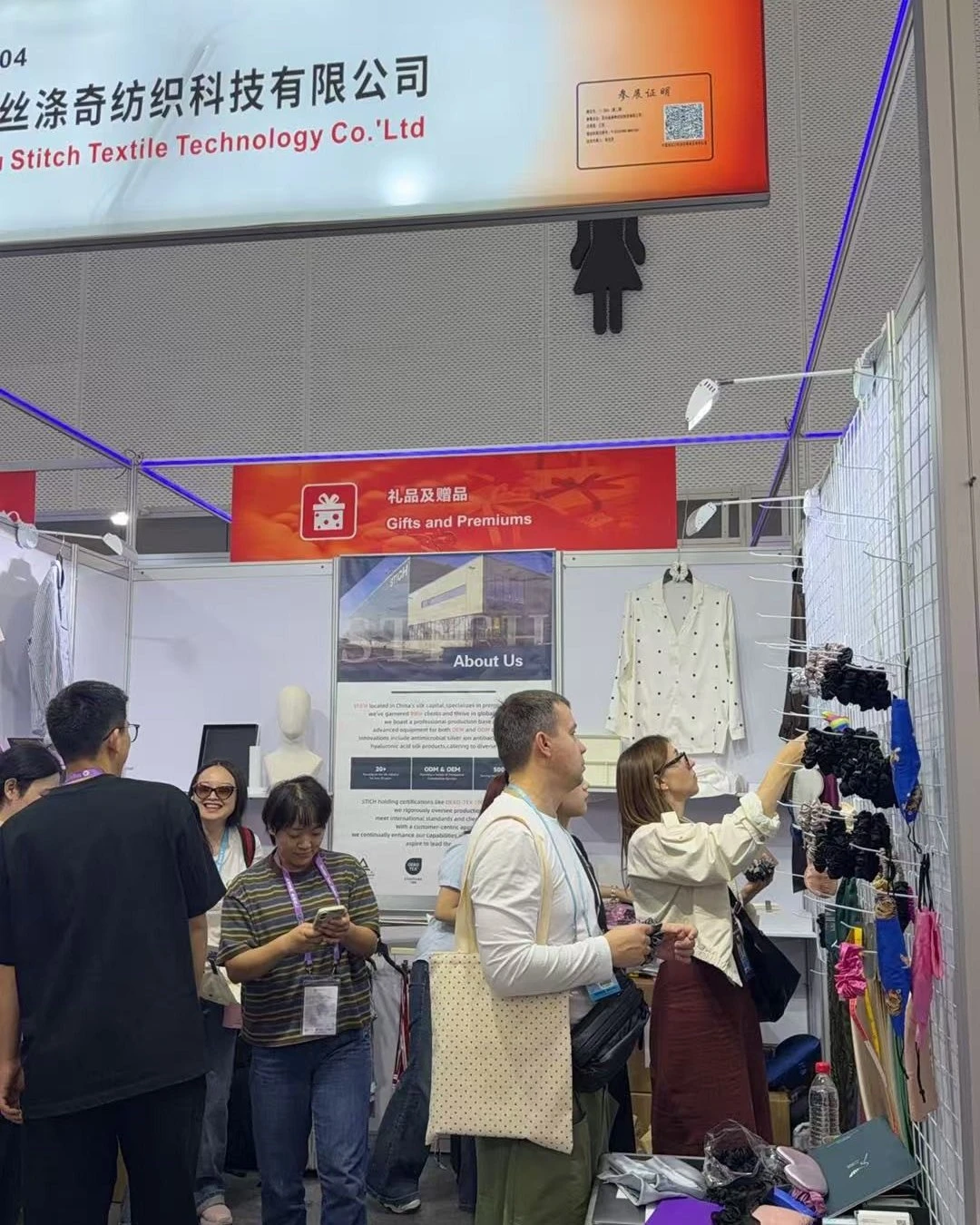
Opening day at Booth 17.2B04, Gifts and Premiums hall.
Four Days, One Booth, the Same Questions
Weight in momme. Which certificates come with the fabric. Will the color shift after repeated washing. Will the seams pull. How is color fastness tested. These came up dozens of times a day, and every answer was given with the sample in hand rather than read off a brochure.
We are Stitch, a silk mill based in Shengze, Suzhou, working with 100% mulberry silk: sleepwear, eye masks, pillowcases, scrunchies, sleep caps, and fully customized silk gift sets.
The Booth Was Rarely Empty
From the first morning the aisle outside the booth stayed busy. The chairs at the meeting table went unused for most of the day. Luka, Alisa, and Joey took turns standing, handing over samples, checking requirements, and answering questions. Meals were eaten standing up, in whatever gap appeared.
Many buyers from the Middle East stayed a long time. Fifteen minutes was common, half an hour not unusual. They handled the fabric again and again, feeling the weight and the drape, holding eye masks up under the booth lighting to check sheen and stitching. What held their attention was not so much the look of the product as whether the supply chain behind it would hold: which packaging options existed, which box formats were available, whether their own logo could go on the box, the exact production lead time, whether an order could ship in installments, how capacity was allocated in peak season, and whether a large urgent order could be fitted into the schedule.
What a Sample on a Shelf Cannot Answer
None of those questions get answered by pointing at a display. They need the packaging reference set and the factory's live production schedule, checked line by line at the table.
On capacity and lead time, nobody on the team hands over an estimate dressed up as a fact. Luka called the workshop from the booth, confirmed with the production manager how much could actually be taken on in the coming week and which slots were already full, and only then reported a figure. Buyers often stood there and listened to the whole call before moving on to price and customization.
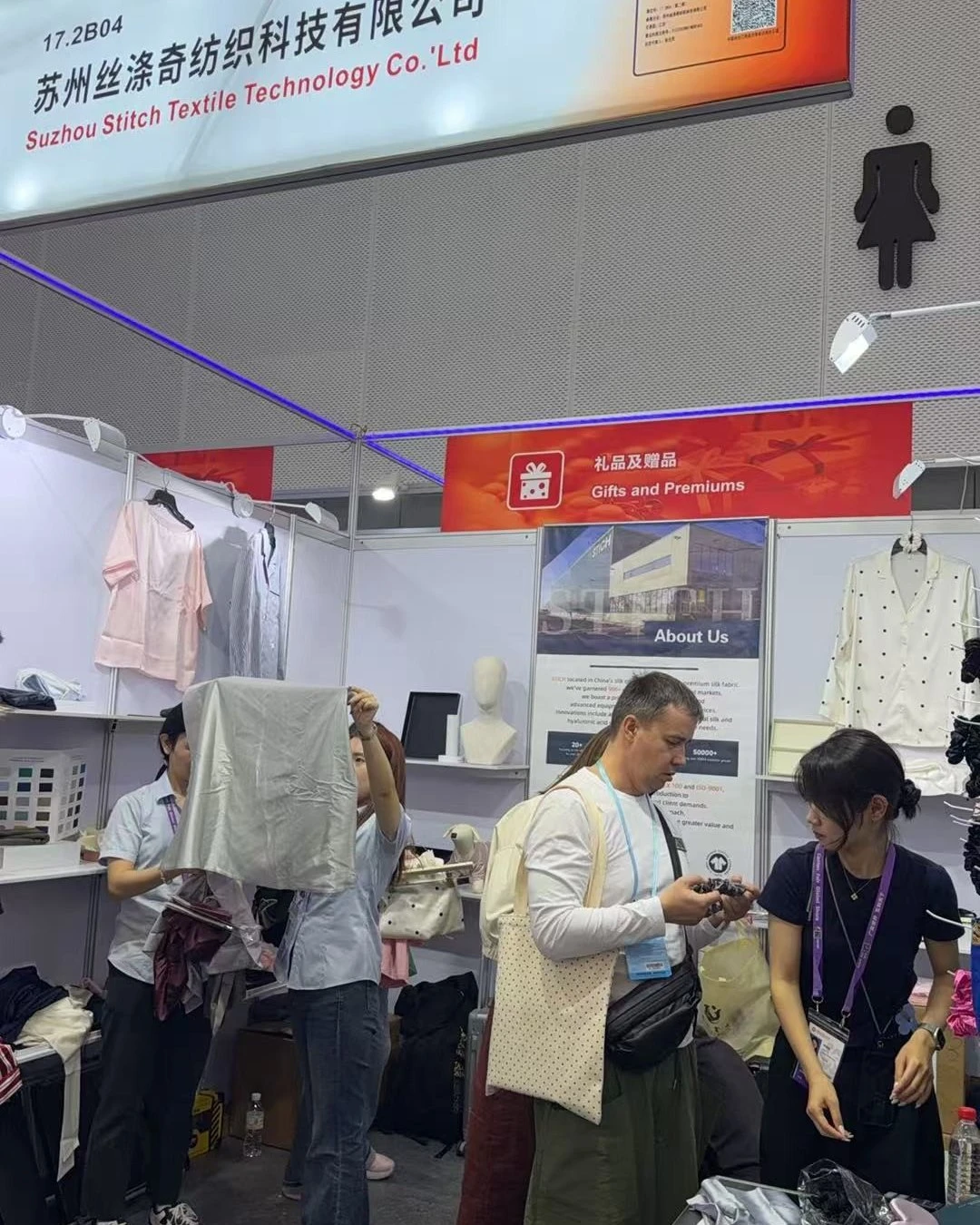
Lead time questions were settled by calling the factory, at the booth, in front of the buyer.
The Certificates Came Out
This is when the documents were laid across the table: OEKO-TEX Standard 100 Class I, GOTS organic certification, and the SGS test report confirming 22 Momme Grade 6A mulberry silk. Joey went through the test items one by one against the samples. Plenty of buyers read the pages themselves, then asked sharper questions: import certification requirements in their own market, and whether the fabric suited local laundering habits.
Buyers Came Back, and Brought Colleagues
In the final days, returning buyers outnumbered first-time visitors. Many came with a colleague or a partner, standing quietly to one side until the group ahead had finished. Samples went out in volume, to be assessed by purchasing and design teams before sampling and quoting. Alisa spent much of the day logging buyer details with several color cards and business cards in hand at once.
The German Buyers: Precision and Process
The most memorable conversations were with German buyers: precise, practical, straight to the point. Most arrive with a notebook, skip the small talk, and open with the hardest question about process or quality. One spent more than twenty minutes on a single set of silk pajamas, turning the fabric over, comparing stitch spacing, checking overlocked edges and seams, working through the whole sample set before saying much.
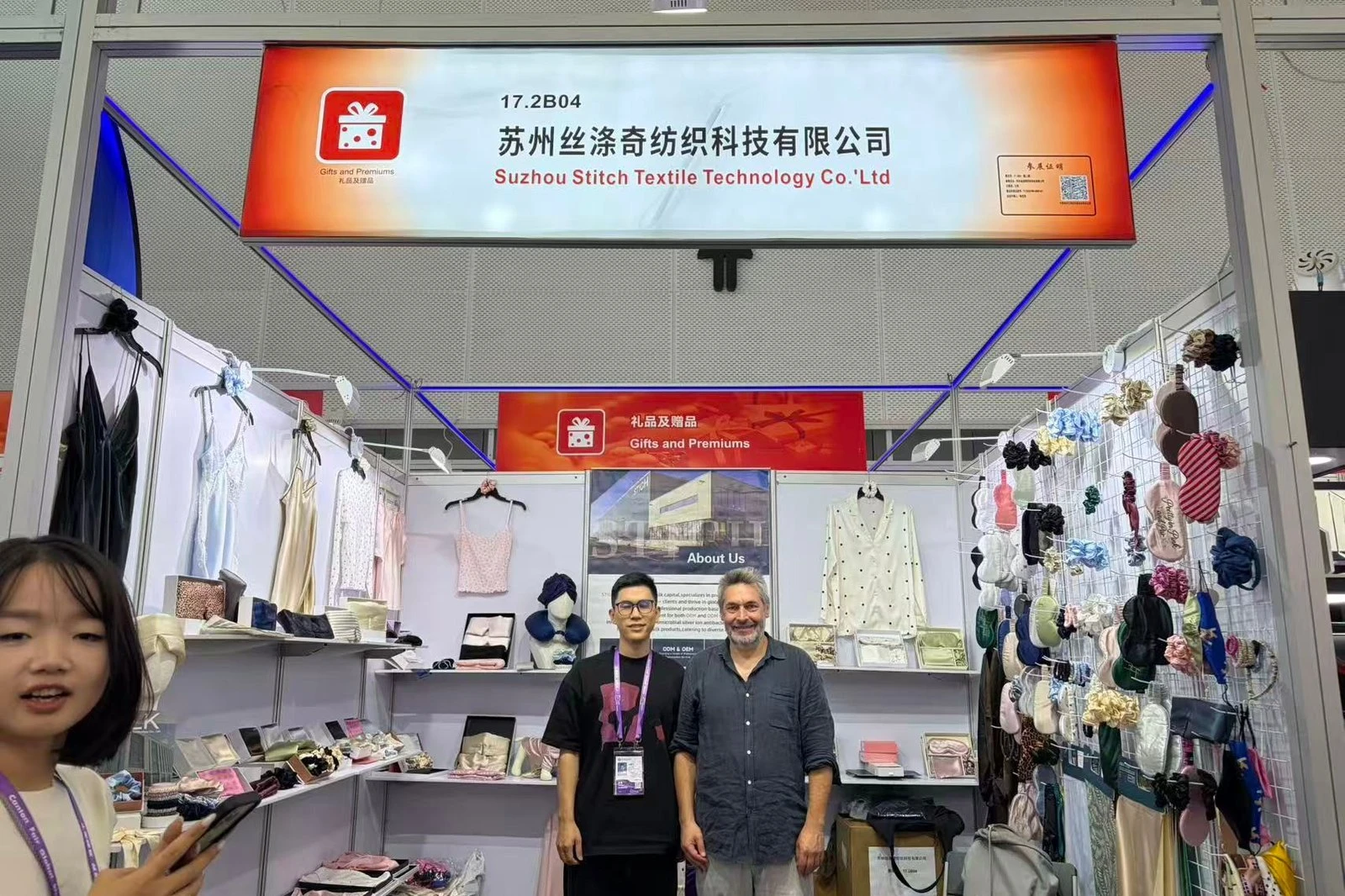
Twenty minutes on one set of pajamas, before a word about price.
On the final afternoon, deals were closed at the booth itself. Not a card exchange and a promise to email a quotation: terms were checked on the spot and signed there. Buyers had seen the product, had their doubts answered directly, and made the decision standing at the table. A few shook hands and said they had spent a long time looking for a mill that could deliver this level of quality consistently.
What Actually Closes an Order
Looking back at the deals signed on site, four things decided them:
- Minimum Order Quantity (MOQ): Clear thresholds per style and colorway.
- Flexible Mixed Styling: Whether different styles can be combined within a single production run.
- Turnkey Packaging Design: In-house development of branded rigid boxes, gift sleeves, and pouches.
- Firm Production Lead Time: Reliable bulk schedules backed by live mill capacity.
Get those four clear and the order follows.
The silk gift sets drew a lot of attention and saved a lot of explaining. Eye masks, pillowcases, and scrunchies combined freely, with the buyer's own mark substituted on the box. Corporate gifting buyers saw the use case immediately. Retail and cross-border e-commerce buyers wanted a full set in hand to take back for market testing and range planning.
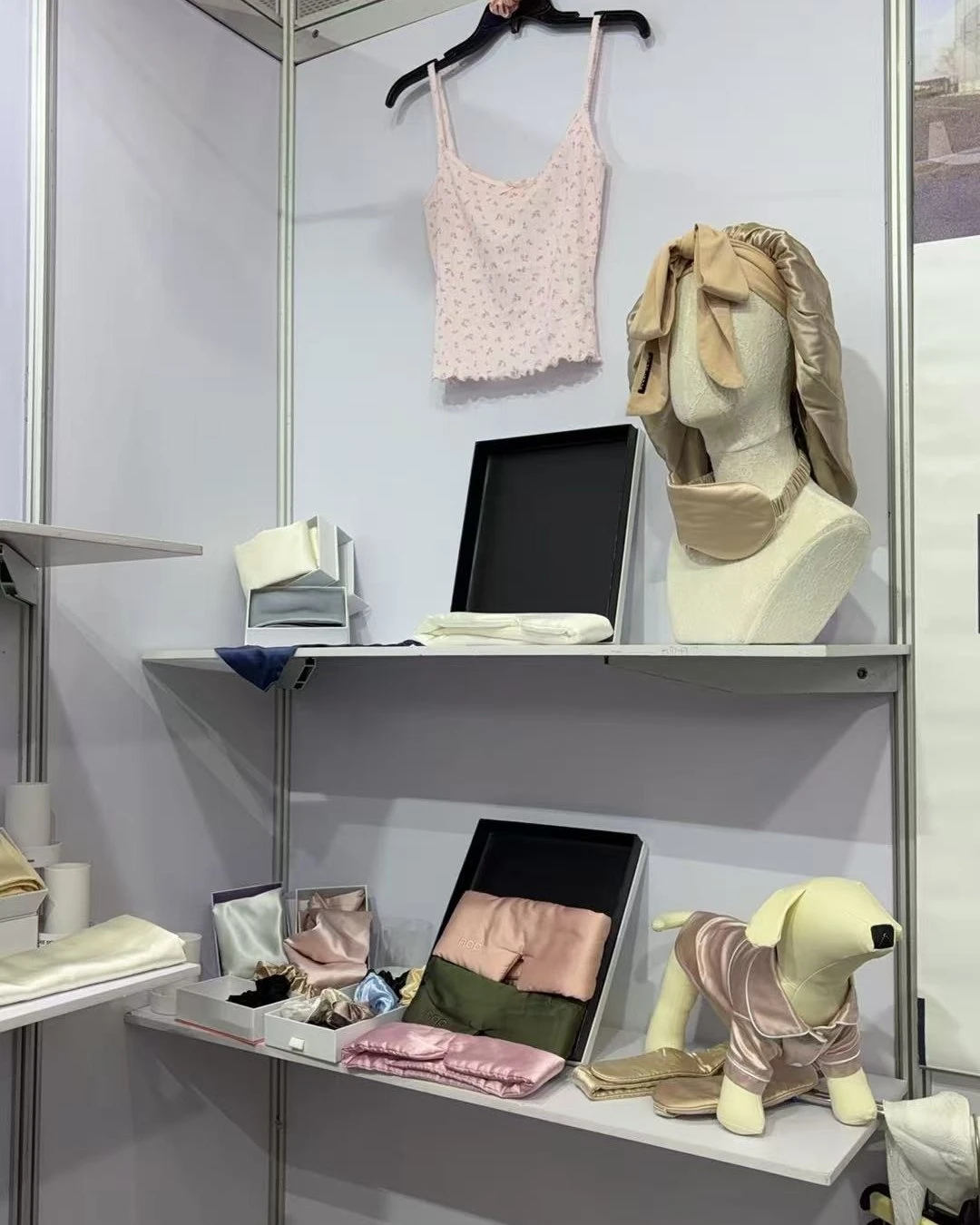
Boxed sets, assembled and ready for a buyer's own mark.
Small accessories did their share of the work too. Silk scrunchies, sleep caps, and a few small dogs wearing miniature silk pajamas. They usually got a laugh first, and then the questions about specifications, pricing, and customization.
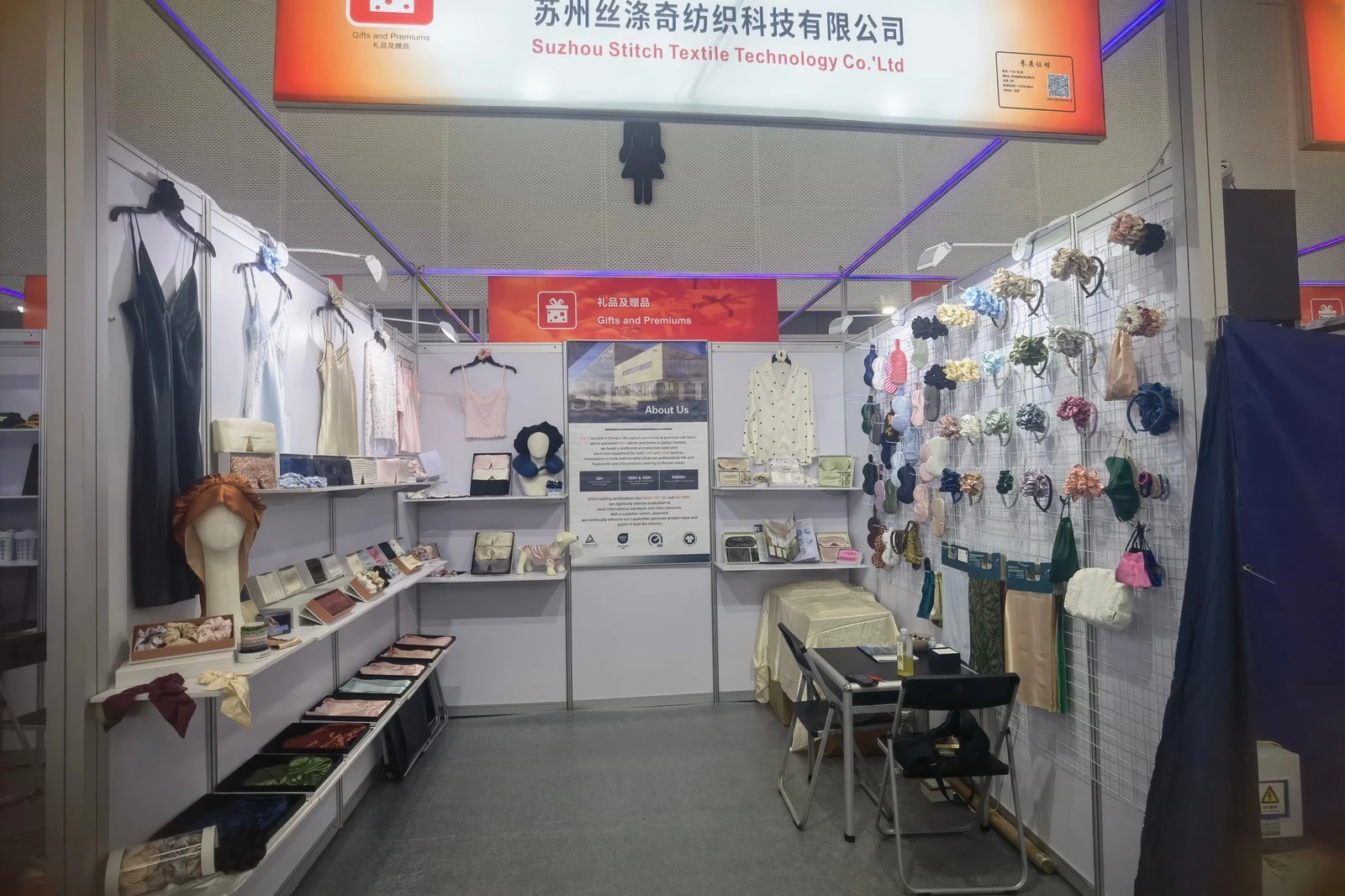
The scrunchie wall, which stopped a lot of people in the aisle.
Teardown and Reflections
On the last afternoon the hall was still busy while booths around us began coming down. Behind our stand, empty cartons were stacked waist-high. At the front, two groups were still at the table: one checking MOQ and price breaks, the other spreading out color cards to pick shades for their market. Joey was still working through technical questions, Luka confirming sampling requests, Alisa writing at the table, someone else meeting people at the edge of the aisle. Nobody had a spare minute.
The crowd only thinned after five. Panels came down, tape went on, samples were packed by category. Even then, buyers who had visited earlier came back to ask for a contact and to take samples home for review.
Orders are never closed in a single moment. They come out of four days of face-to-face questions, of buyers handling every meter of silk themselves, of a team putting quality, lead time, customization, and certification on the table and answering each one straight.
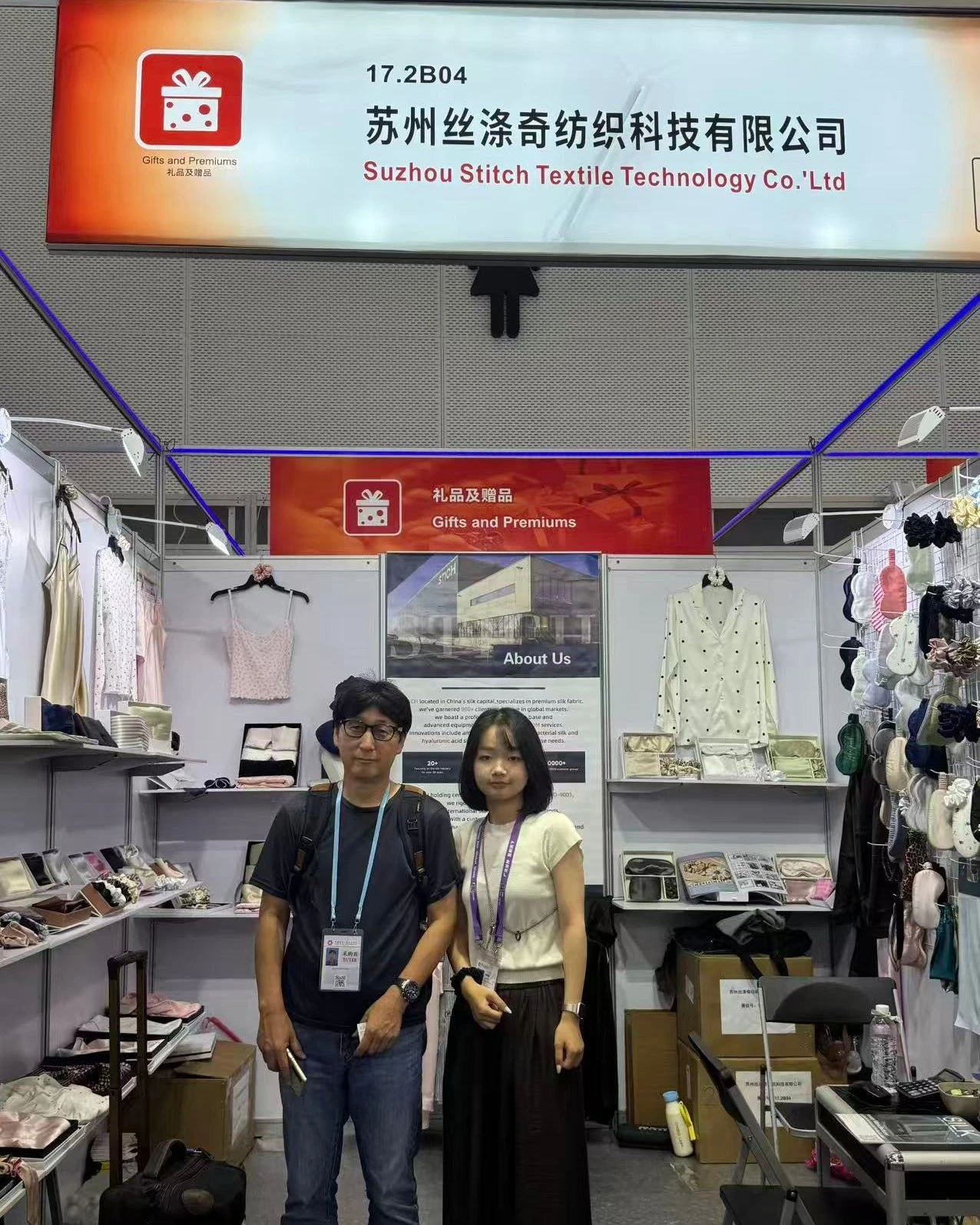
Before teardown: bags already at the booth entrance.
Next Stop: Phase 3 at Booth 16.2I08 (Oct 31 – Nov 4)
The bags from Guangzhou are barely unpacked. We are already counting samples and checking documents for the next round.
Phase 2 also left a few regrets. Some conversations were cut short by the crowd. Some promising discussions were still opening when the closing announcement came over the hall. So we are coming back with the full sample range and every test certificate on the table.
If you are looking for specific shades for your market, planning an OEM or private label program, or sourcing silk gift sets for corporate gifting, bring your color references and your logo files. A great deal of supply chain friction and quality doubt does not survive ten minutes of face-to-face conversation.
Come and put your market problems and project goals on the table. The Stitch team will be there.
Suzhou Stitch Textile Technology Co., Ltd.
Booth: 16.2I08 (Phase 3: October 31 – November 4, 2026)
Interesse in onze producten?
Neem vandaag contact op voor vragen, offertes of meer informatie over onze producten.