Private-label silk duvet covers, developed around your insert sizes, color palette, closure details, and packaging. Build a standalone product or a coordinated bedding collection.

Soft sheen, fluid drape, and a coordinated look for your bedding collection. Develop a silk duvet cover on its own or pair it with matching pillowcases and sheets.
Choose the fabric, color, finished sizes, and branding to suit your range. Each piece and its packaging are quoted to your project requirements.
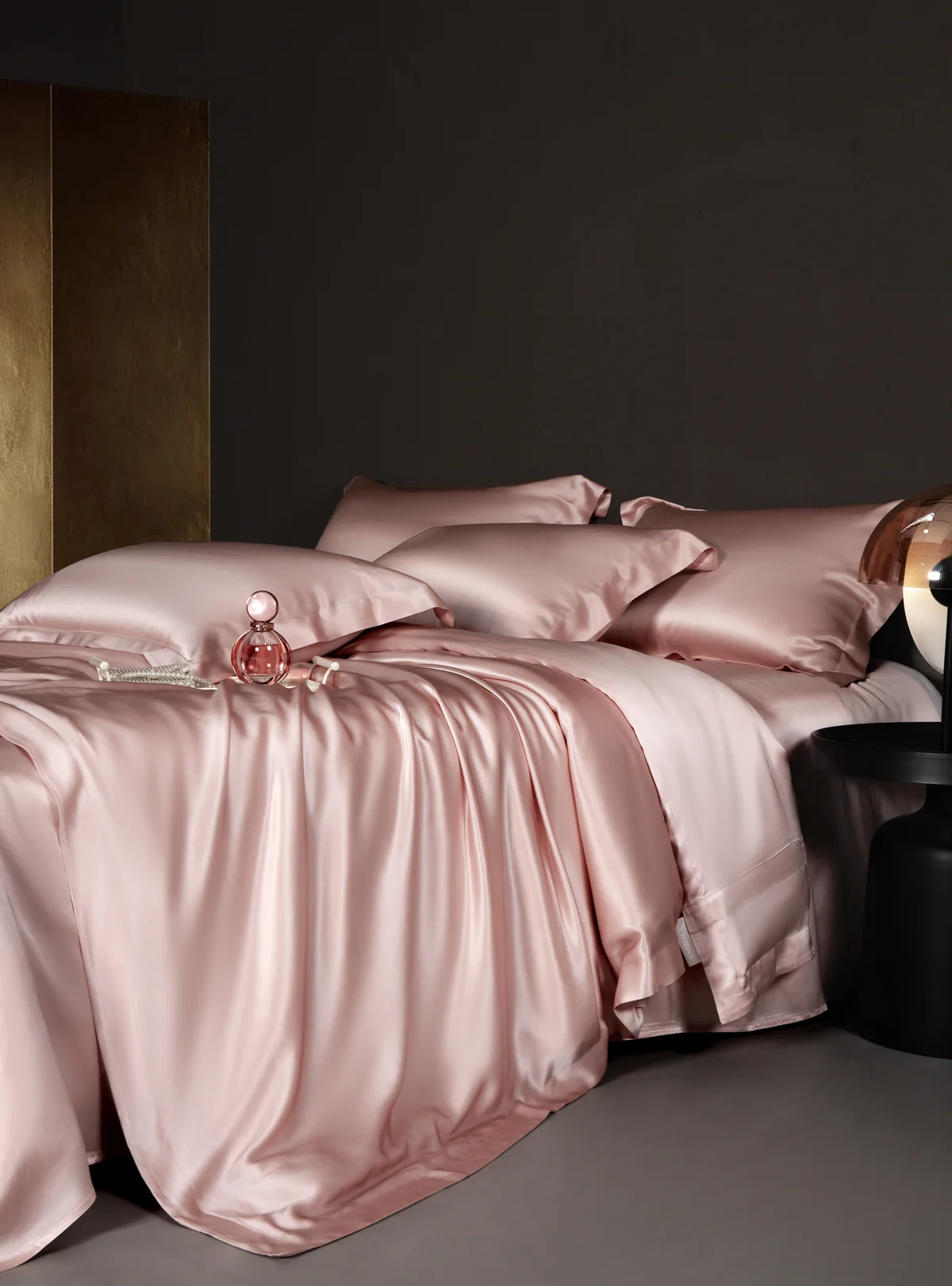
Explore sky blue, champagne, and silver grey as starting points for your palette. Coordinate duvet covers and matching pieces around the same approved shade.
Review a physical swatch to confirm the final shade, available fabric, and dye-lot requirements before sampling.
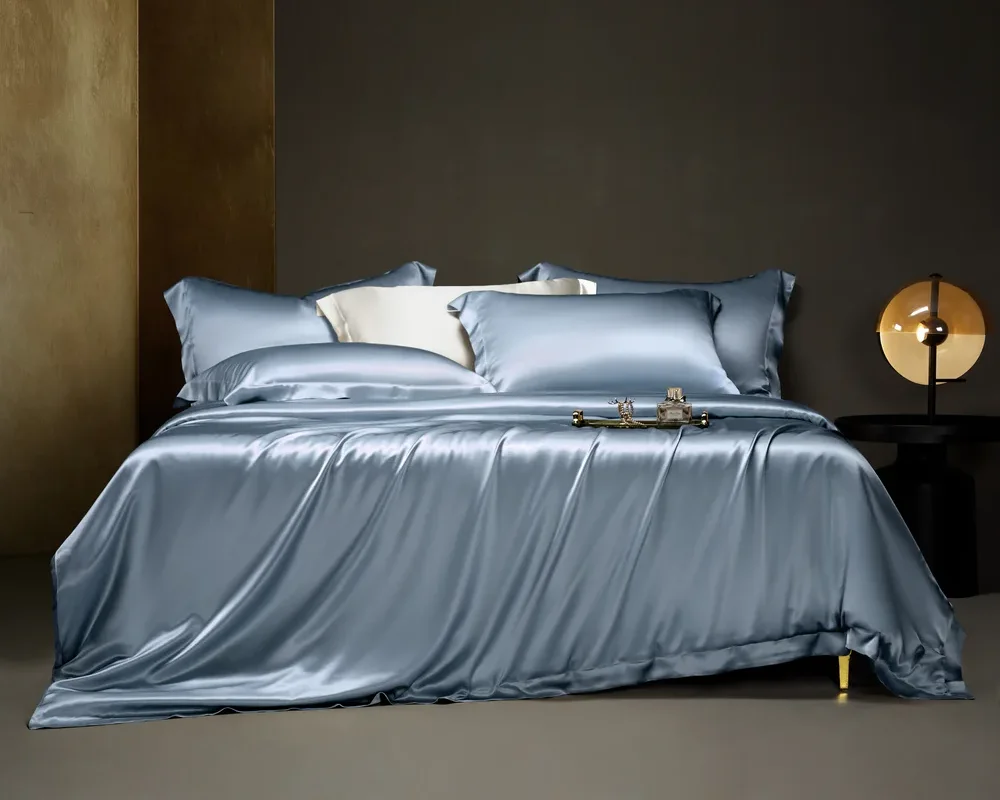
Silk weight, surface sheen, and handfeel shape how the finished duvet cover looks and drapes. Compare fabric swatches and agree the composition and momme for your collection.
Usable fabric width and panel direction are reviewed before cutting. Your approved swatch sets the reference for shade and surface appearance; the care method is confirmed during development.

Share your insert dimensions and target finished sizes. We develop the panel layout, concealed zipper or button closure, inner ties, and edge finish around the intended fit.
Brand and care labels, matching pieces, folding, and packaging are specified together. Include your quantity and destination market so the quotation covers the complete order.
Review a sample before bulk production. The approved fabric, measurements, construction, and care result become the reference for production and final inspection. MOQ and timing are confirmed for your brief.

Provide duvet insert and target finished sizes, target quantity, preferred silk specification or momme, color, closure, inner ties, edge finish, care method, branding, packaging, and destination market. A reference sample or measurement drawing is also helpful.
Yes. The closure method, opening length and position, puller or button specification, protective flap, edge finish, and operation standard should be approved on the physical sample.
Yes. The number and positions can be developed around the intended insert. Tie material, length, attachment method, reinforcement, and compatibility with the insert loops should be confirmed together.
Not automatically. The final dimensions should consider the buyer size system, insert construction, preferred fit, silk behavior, seam allowance, and agreed care method. Insert and finished measurements should be listed separately.
The process uses coded material and shade references, batch grouping, consistent panel direction, cutting control, full-panel inspection, and approved lighting conditions before finished-goods release.
These depend on the approved silk, size range, color development, construction, quantity, labeling, packaging, and testing requirements. Share the complete brief so the applicable quotation and schedule can be confirmed.
Start a development brief
Share the insert and finished sizes, silk or momme direction, color, closure, inner ties, edge details, branding, packaging, quantity, and destination market.