Printed Scarf Direction
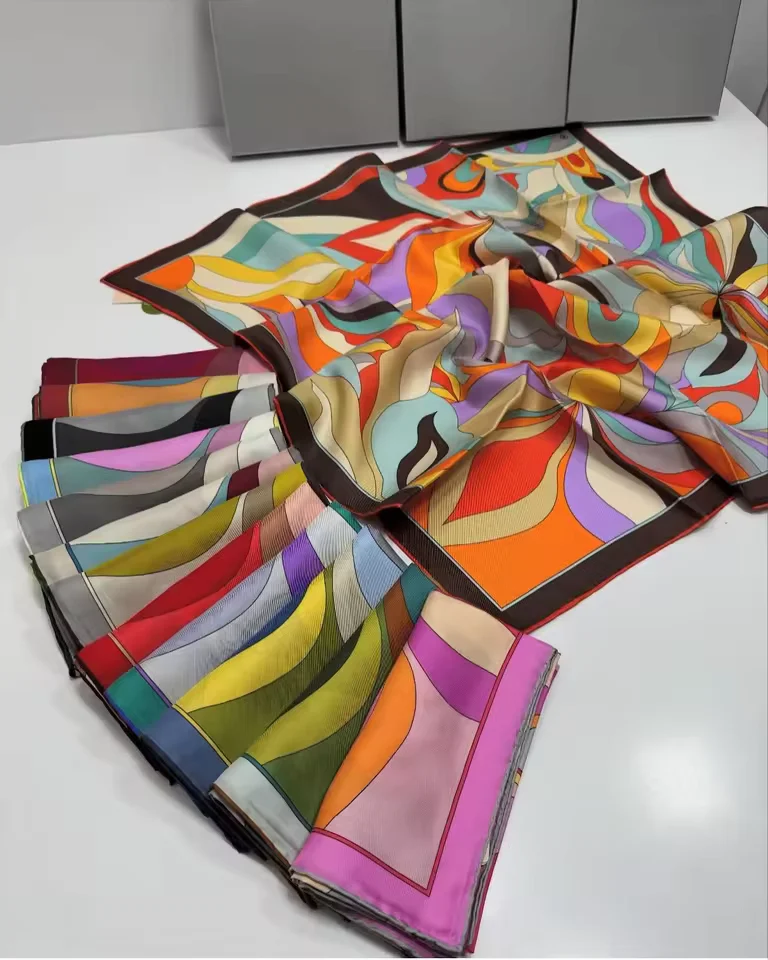
Use the existing scarf reference to coordinate artwork, base fabric, scent family, application route, drape, care, labels, and packing.
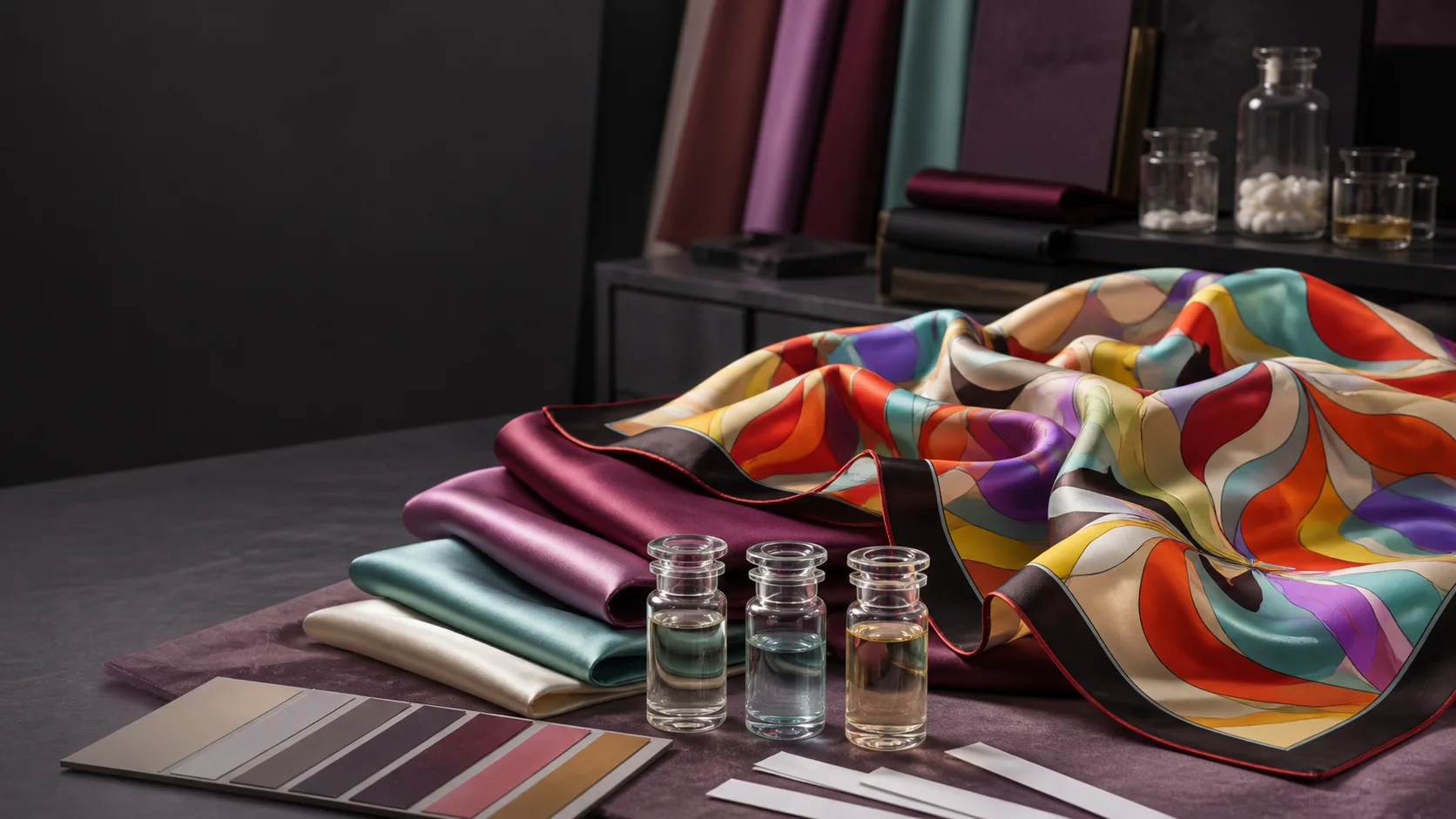
Develop fragrance-finished textiles through coded scent samples, controlled carrier and application trials, base-fabric review, care evaluation, safety documentation, and retained sensory standards.
A fragrance textile brief should identify the scent code, carrier or binder system, base fabric, dose, application route, curing conditions, intended product, packing method, and care cycle rather than relying on a fragrance name alone.
The refreshed library combines an existing printed-scarf reference with new sampling-bench, product-collection, and campaign scenes. These images show how scent selection can move from coded lab samples into coordinated silk products.
Initial scent character and after-care perception should be approved against retained references. Avoid blanket “long-lasting” or wellness claims unless the exact sample, test or sensory method, duration, storage, care, and market wording support them.
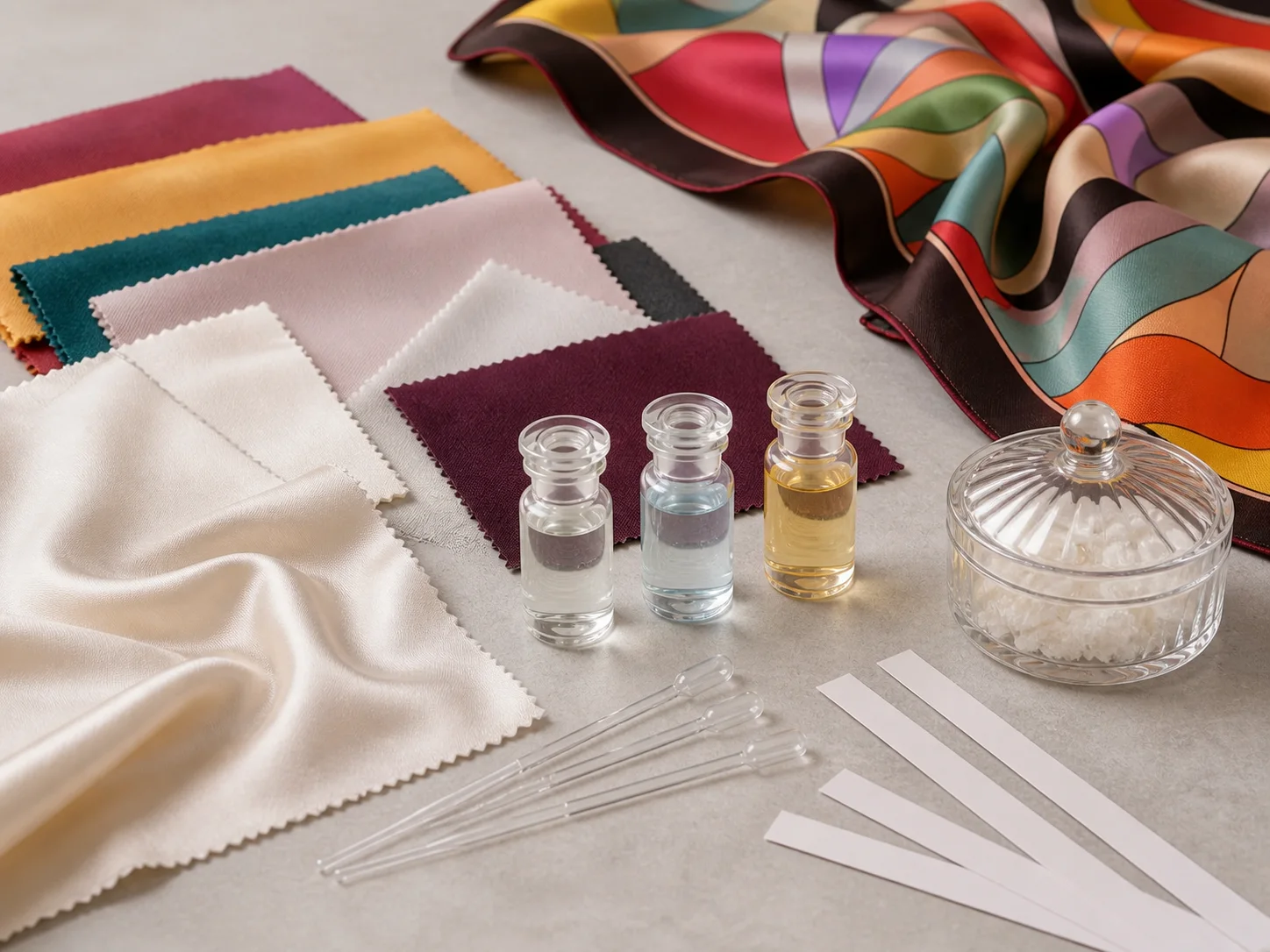
Confirm base fabric, scent code, carrier, dose, application and curing, care evaluation, retained standard, safety file, packaging, and permitted sensory wording.
Use the existing scarf reference to coordinate artwork, base fabric, scent family, application route, drape, care, labels, and packing.
Compare fragrance codes on untreated and treated swatches while recording dose, process, initial character, dry-down, shade, handfeel, and odor carryover.
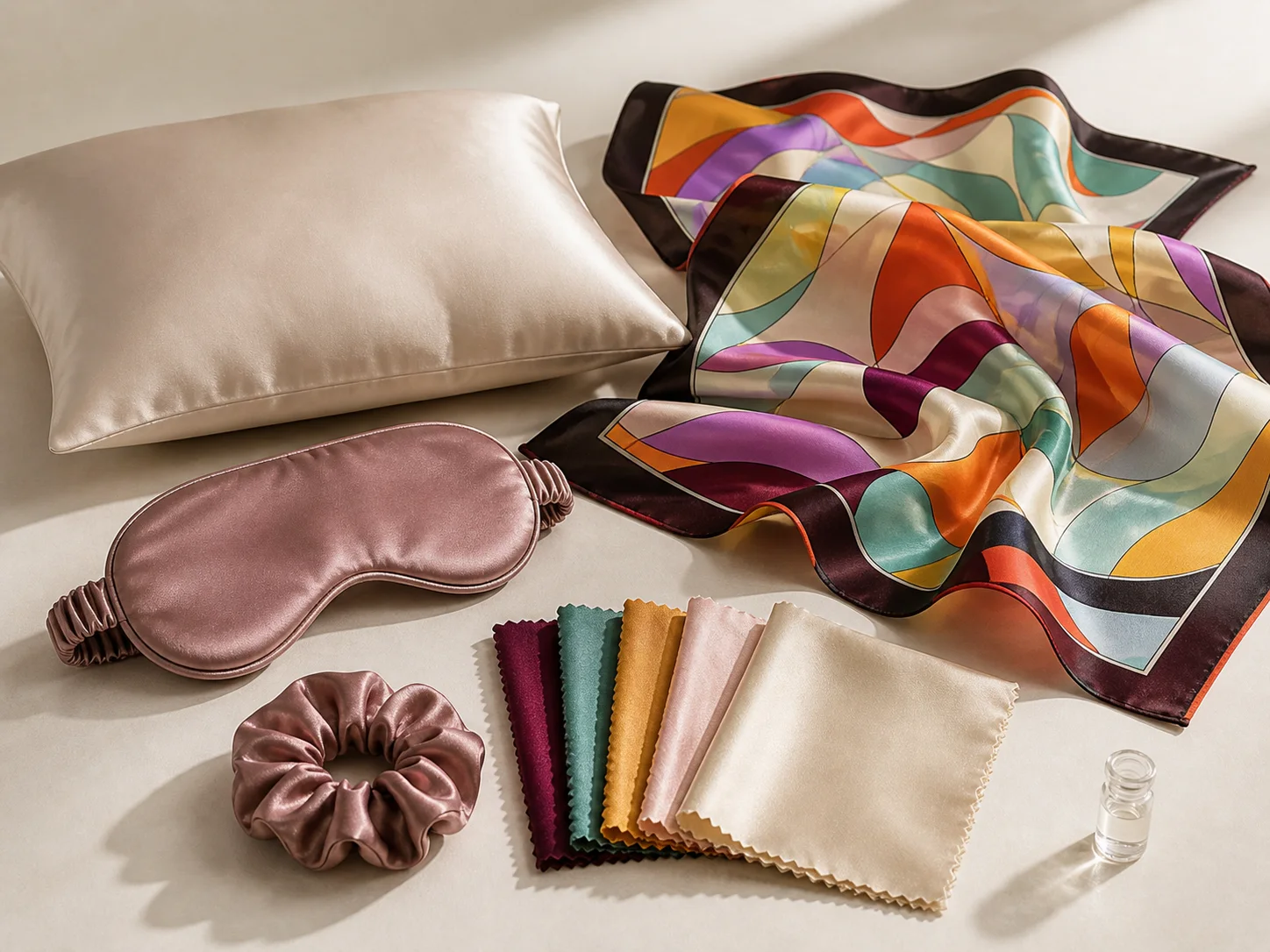
Extend one approved scent direction across pillowcases, masks, scrunchies, scarves, and swatches under shared standards.
Align color, print, scent family, packaging, product mix, and the intended buyer story before bulk development.
Connect scent code, formula inputs, application records, retained swatches, initial and after-care evaluations, safety documents, packing, and release copy.
Lock scent code, supplier and safety file, carrier or binder, base fabric, dose, application and curing conditions, color, handfeel, initial and after-care sensory standards.
Use identified inputs, formula and machine records, application and curing checkpoints, lot and shade tracking, retained samples, and finished-goods inspection.
Record formula and sample codes, dates, panel or test method, storage and care conditions, evaluation points, retained references, lot connection, and any restricted-substance or labeling review. Use specific sensory language and supported duration conditions. Do not present fragrance as a wellness, therapeutic, or universally long-lasting benefit without appropriate evidence.
Confirm the exact fabric and product, target market, quantity, care route, finish or scent objective, intended wording, and required evidence.
Create an untreated control and identified treated samples with formula direction, application conditions, color, handfeel, odor, and date recorded.
Convert the selected finish into the intended product and compare appearance, surface, seams, odor, packing, and performance after the agreed care cycle.
Connect the approved sample to the process sheet, production lot, inspection plan, retained reference, labels, packaging, reports, and release wording.
Base material
Composition, construction, momme or GSM, usable width, color standard, existing finish status, intended product, and care route.
Finish system
Lock scent code, supplier and safety file, carrier or binder, base fabric, dose, application and curing conditions, color, handfeel, initial and after-care sensory standards.
Approval and durability
Coded control and treated swatches, target handfeel and odor, product sample, intended-care result, retained reference, bulk tolerance, and release sign-off.
Evidence and wording
Record formula and sample codes, dates, panel or test method, storage and care conditions, evaluation points, retained references, lot connection, and any restricted-substance or labeling review. Use specific sensory language and supported duration conditions. Do not present fragrance as a wellness, therapeutic, or universally long-lasting benefit without appropriate evidence.
Build scarves, gift textiles, sleep accessories, coordinated sets, and buyer-owned scent programs from one approved sensory standard.
Pair print and scent through controlled strike-offs, finish trials, sensory approval, care review, labeling, and gift presentation.
Develop coordinated pillowcase, eye-mask, scrunchie, and scarf sets with one approved fragrance code and retained standard.
Translate a supplied fragrance or scent brief into coded swatches, product trials, after-care review, safety-file checks, and bulk controls.
Yes. Start with the exact product, base fabric, color or artwork, quantity, care route, target market, finish or scent objective, intended wording, and required test or safety documents.
No. It documents a particular sample, date, and scope. Current development should connect the approved sample and production lot to the intended care conditions, evidence requirements, and market wording.
Approve the base fabric, coded finish sample, formula and process direction, product sample, care result, color and sensory standard, labels, packaging, inspection criteria, retained reference, and claim evidence.
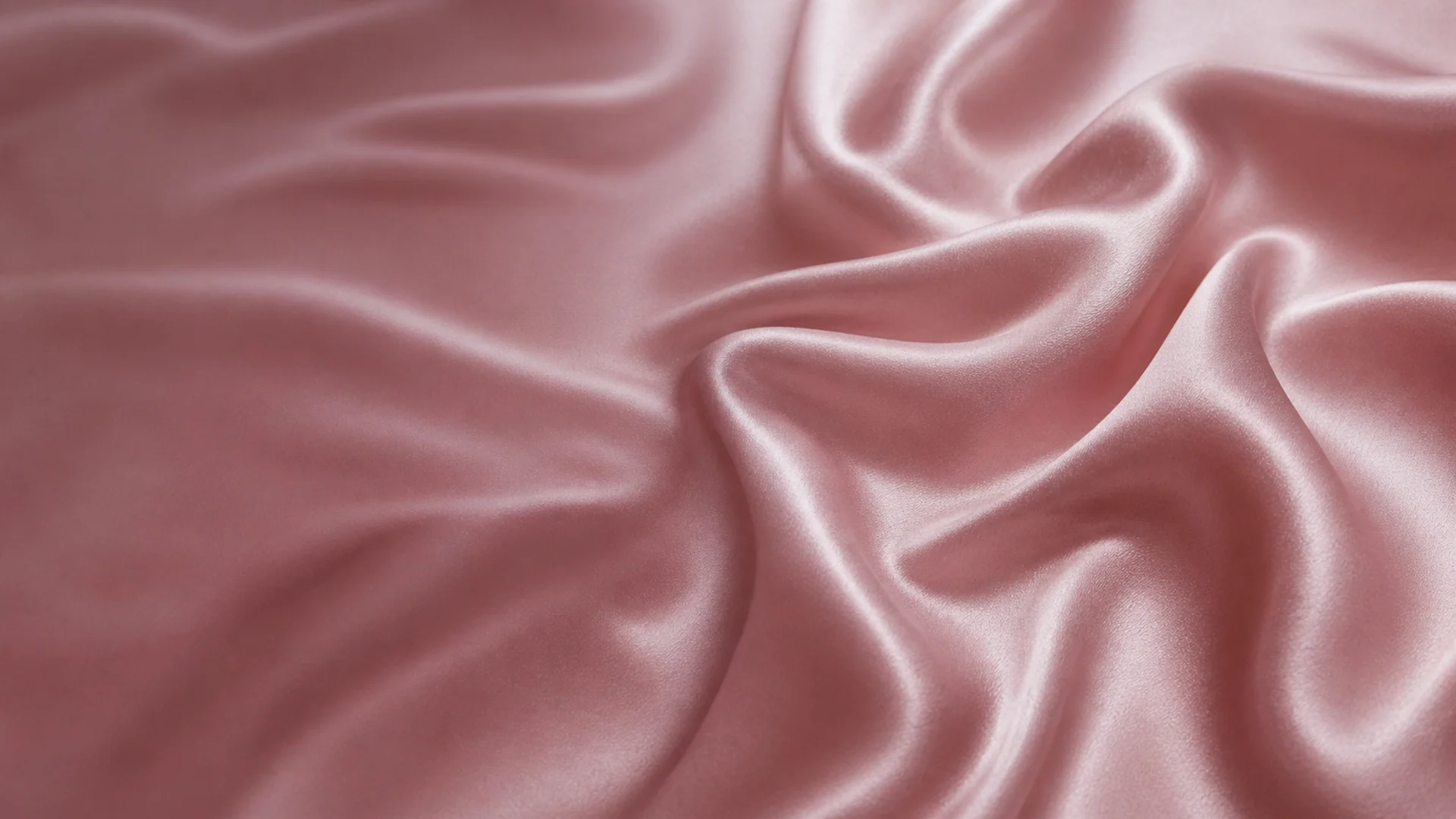
Pure silk constructions selected by weave, momme, width, drape, opacity, printing behavior, sewing performance, and end use.
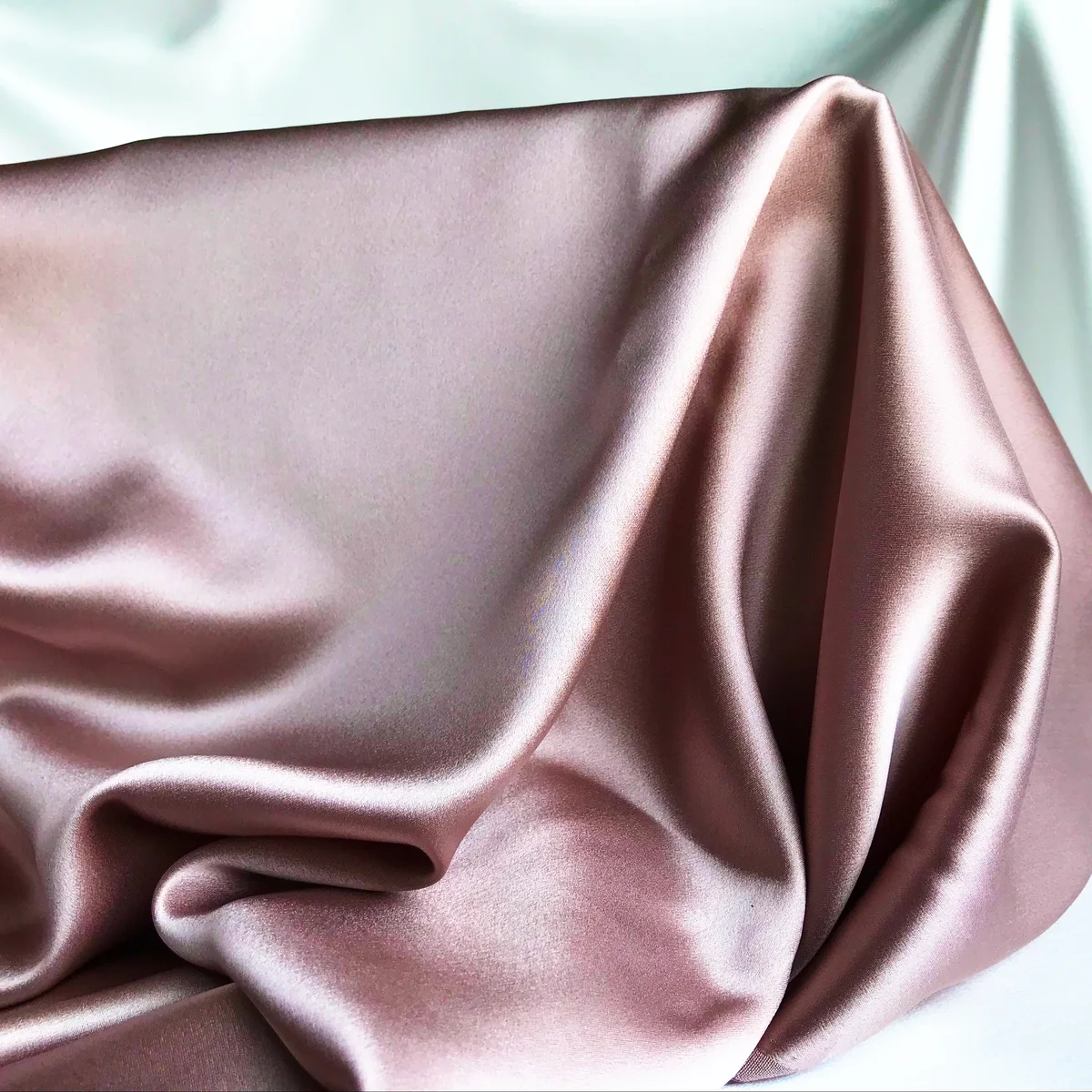
Core silk fabric supply for swatch review, sampling, and bulk material planning.
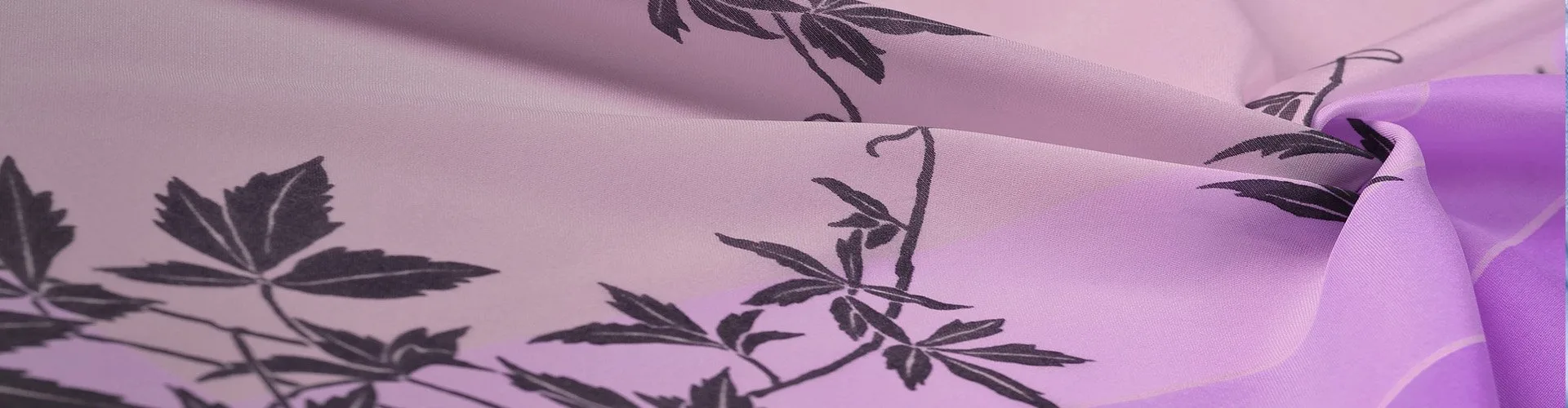
Bamboo-derived and silk–bamboo materials specified by exact composition, weave, GSM, shrinkage, pilling, care, and claim evidence.
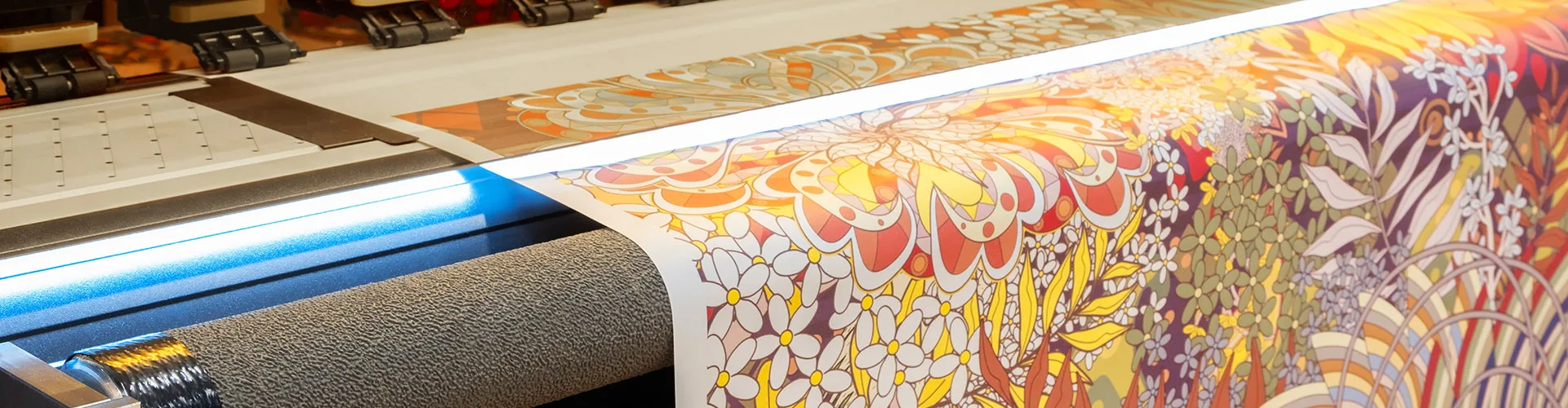
Printing and finishing programs developed around fiber chemistry, artwork, color approval, handfeel, fastness, care, and supported claims.
Start a development brief
Provide base fabric, product, scent reference, carrier direction, care method, packaging, market wording, safety needs, quantity, and target duration conditions.