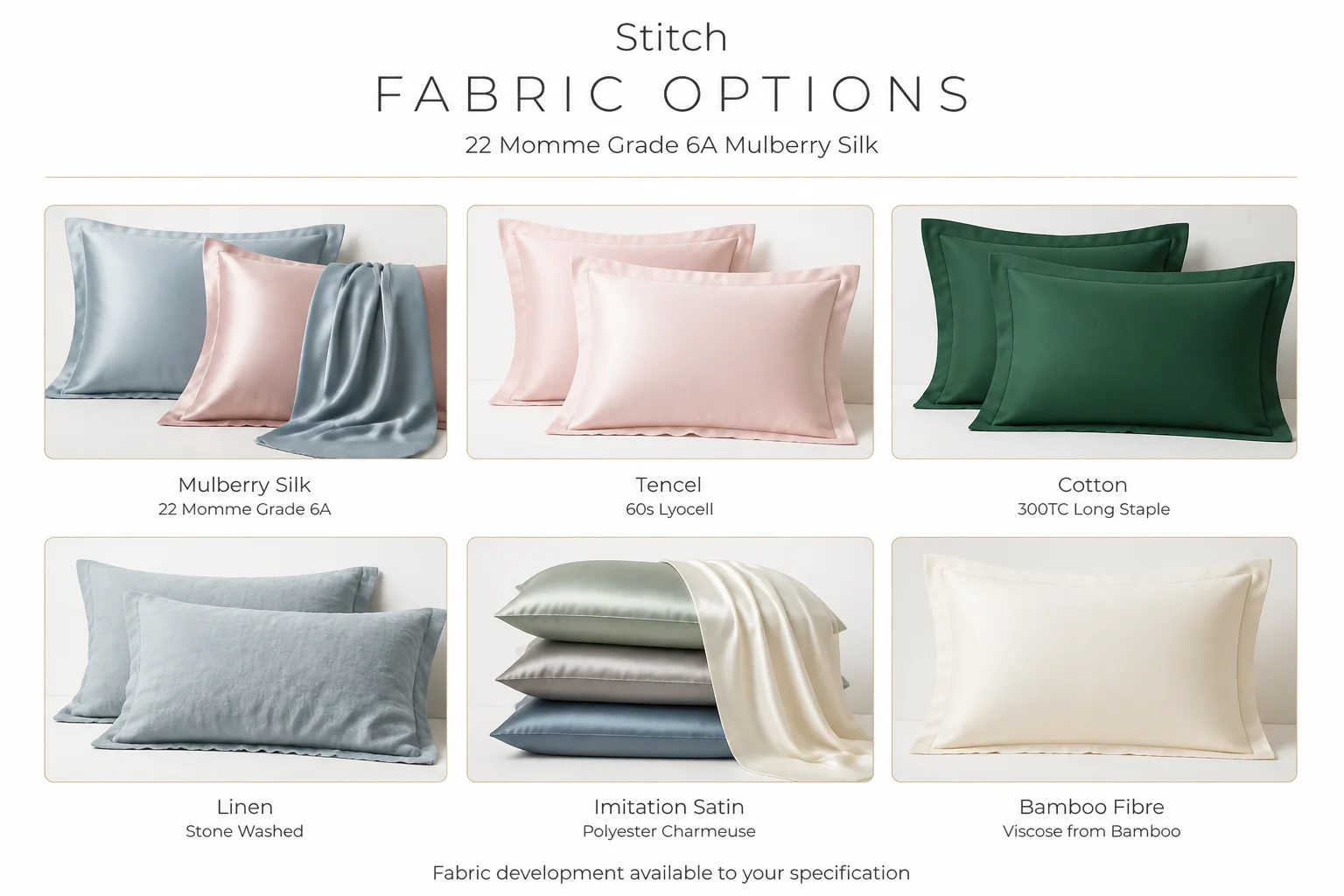
Material And Pillowcase Options
Compare lyocell with silk, cotton, linen, polyester satin, and bamboo-derived fabric before selecting the base for a pillowcase or bedding program.
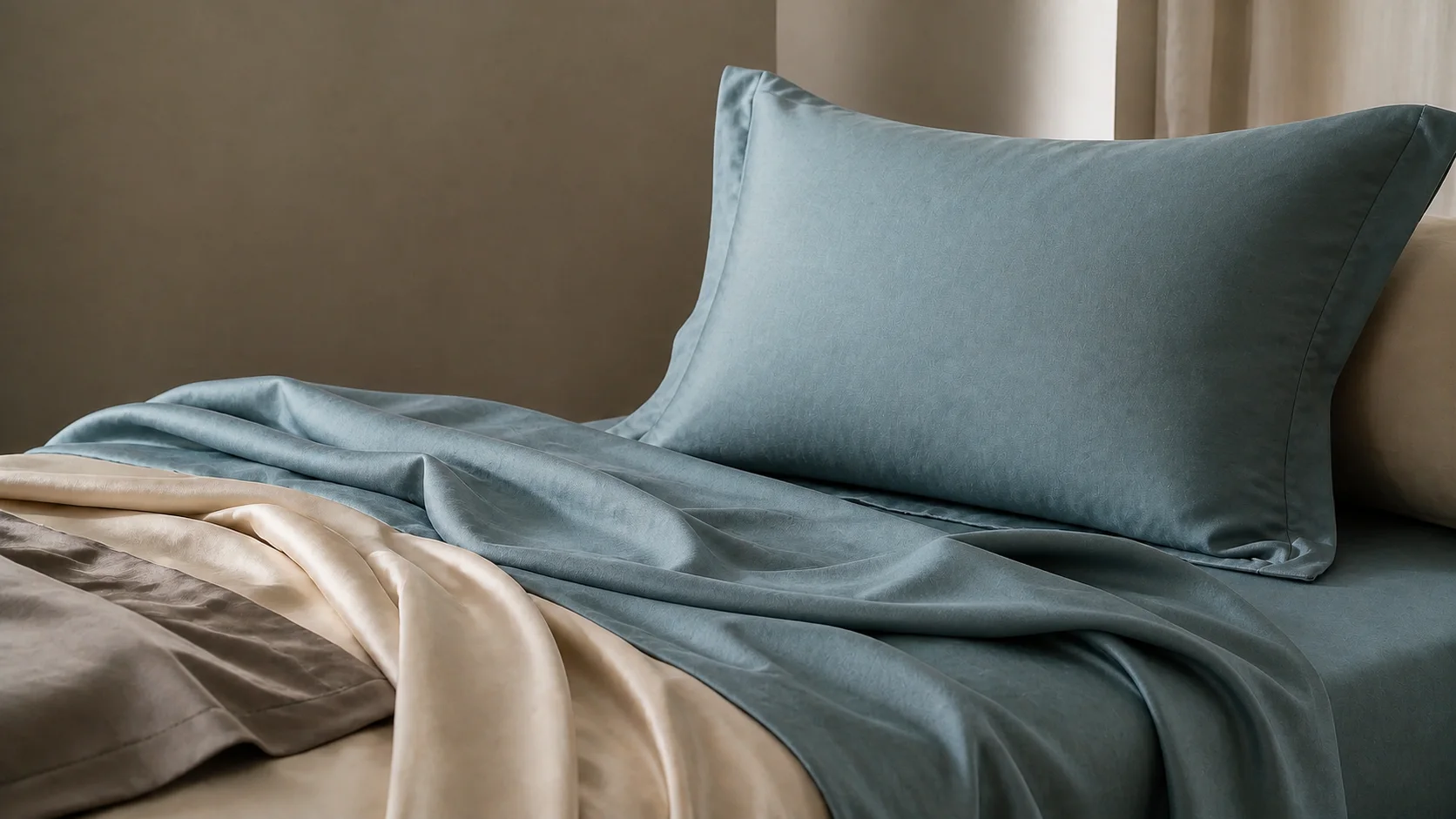
Develop lyocell bedding, loungewear, and blended textile programs around verified fiber identity, weave, GSM, drape, fibrillation control, color, care, and repeatable bulk standards.
Lyocell is a regenerated cellulose fiber valued for fluid drape, a smooth hand, and moisture-management potential. The fiber name alone does not define the weave, weight, finish, opacity, shrinkage, or behavior in the finished product.
The current material library combines an existing Tencel pillowcase option, a bedding application reference, a silk-lyocell blend direction, and a printed lyocell surface. These are development starting points that still require an approved physical swatch and exact order specification.
TENCEL™ is a trademark. Use branded wording only when the selected supply chain and documentation support it; otherwise use the appropriate generic lyocell fiber name for technical and labeling work.
Compare composition, weave, GSM, surface, drape, fibrillation risk, color route, care, and product conversion before bulk approval.
Compare lyocell with silk, cotton, linen, polyester satin, and bamboo-derived fabric before selecting the base for a pillowcase or bedding program.
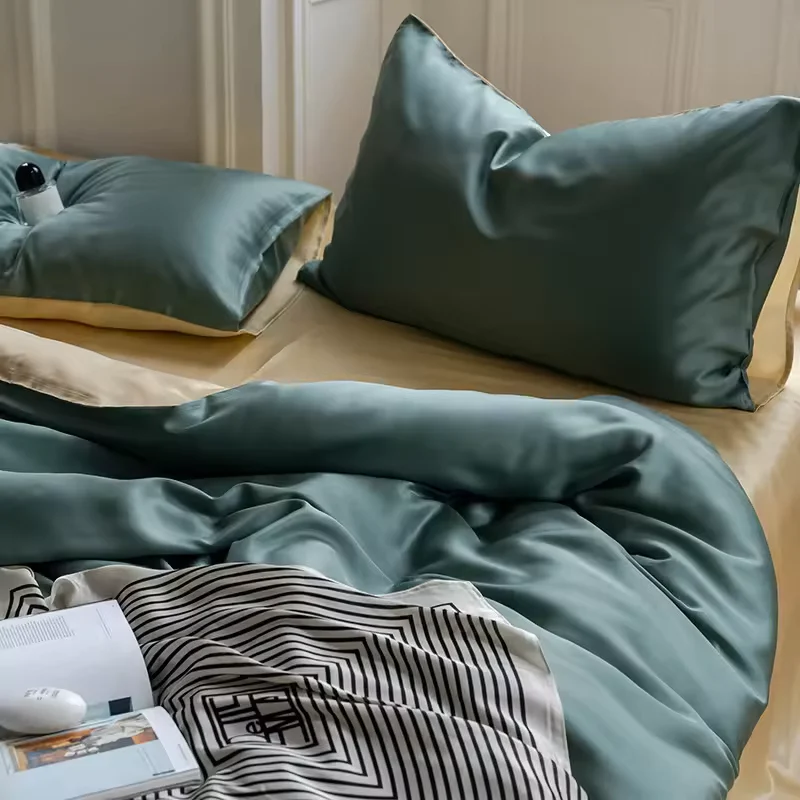
Review fluidity, surface smoothness, color, opacity, large-panel appearance, and intended laundering on a full bedding reference.
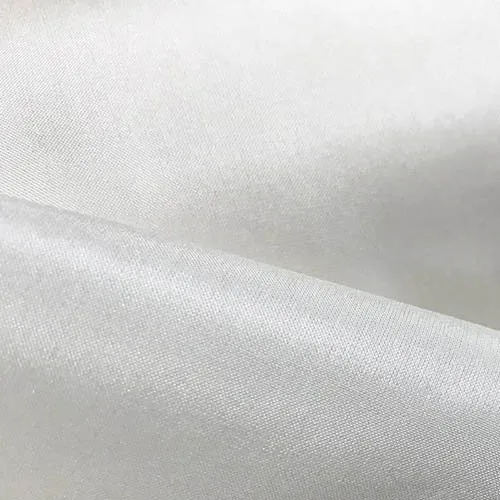
Use a documented blend when the program needs a controlled balance of luster, softness, drape, care, strength, and target cost.
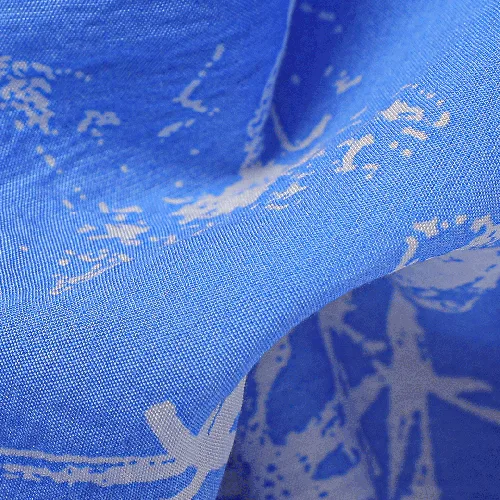
Approve artwork, chemistry, strike-off, colorfastness, surface change, handfeel, and care on the exact production construction.
Composition
State generic lyocell or verified TENCEL™ branded fiber, including every blend fiber and percentage.
Construction and finish
Confirm GSM, weave, usable width, shrinkage, pilling, colorfastness, fibrillation direction, drape, opacity, and care.
Color or print approval
Provide a physical color reference or artwork, approve a lab dip or strike-off, and review the result after final finishing and intended care.
Bulk release
Keep the approved swatch and product sample, lot and shade references, inspection standard, test plan, care label, packing method, and repeat-order tolerance.
Confirm the finished product, target market, quantity, price direction, care route, color or artwork, and required claims before choosing the construction.
Compare coded physical swatches with complete composition, construction, weight, usable width, finish, supplier reference, and test requirements.
Cut, sew, finish, and care-test the intended product so drape, opacity, seams, shrinkage, surface, and packing can be approved together.
Connect the approved swatch and sample to roll identity, shade grouping, process notes, inspection, test evidence, labels, and retained references.
Connect fiber documentation, swatches, lot codes, width and GSM checks, shade, fibrillation review, care results, and retained products.
State generic lyocell or verified TENCEL™ branded fiber, including every blend fiber and percentage.
Confirm GSM, weave, usable width, shrinkage, pilling, colorfastness, fibrillation direction, drape, opacity, and care.
TENCEL™ is a trademark; branded wording requires a supported supply chain and documentation.
Develop bedding, pillowcases, loungewear, blends, and soft-touch private-label collections.
Build sheet, duvet-cover, and pillowcase programs around usable width, GSM, shrinkage, pilling, shade grouping, and care.
Balance drape, opacity, recovery, seam behavior, pressing, and after-care appearance for fluid apparel products.
Develop artwork-led bedding, apparel, scarves, or accessories from an approved base and strike-off.
Yes. Start with the exact end product, target market, quantity, composition direction, construction, color or artwork, performance needs, care route, branding, and packaging.
No. TENCEL™ is a trademark; branded wording requires a supported supply chain and documentation. Final labeling should follow verified composition documents and target-market requirements.
Approve the coded fabric swatch, color or print standard, cut-and-sew sample, care result, specifications, labels, packaging, inspection criteria, and any claim evidence required for the order.
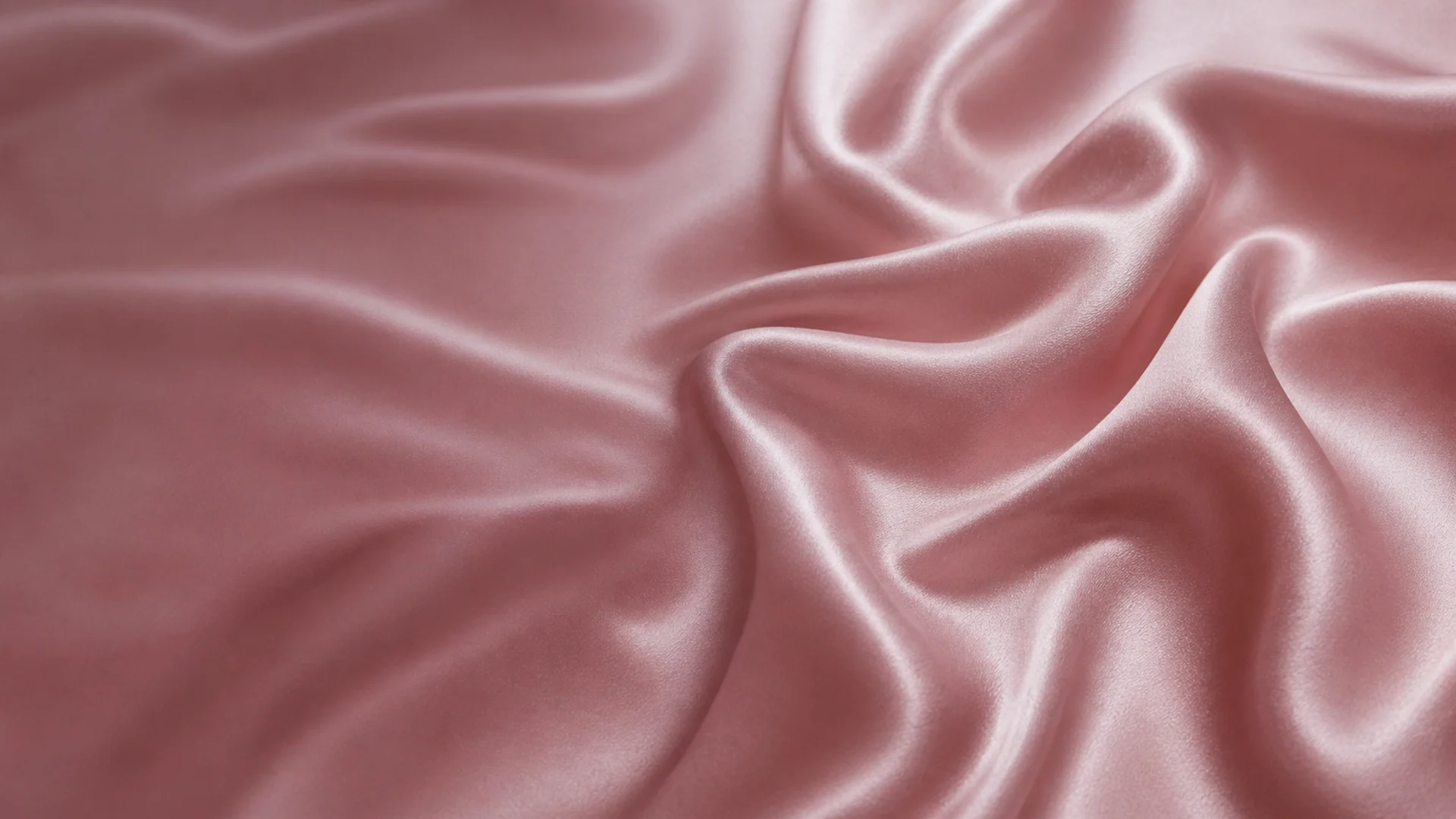
Pure silk constructions selected by weave, momme, width, drape, opacity, printing behavior, sewing performance, and end use.
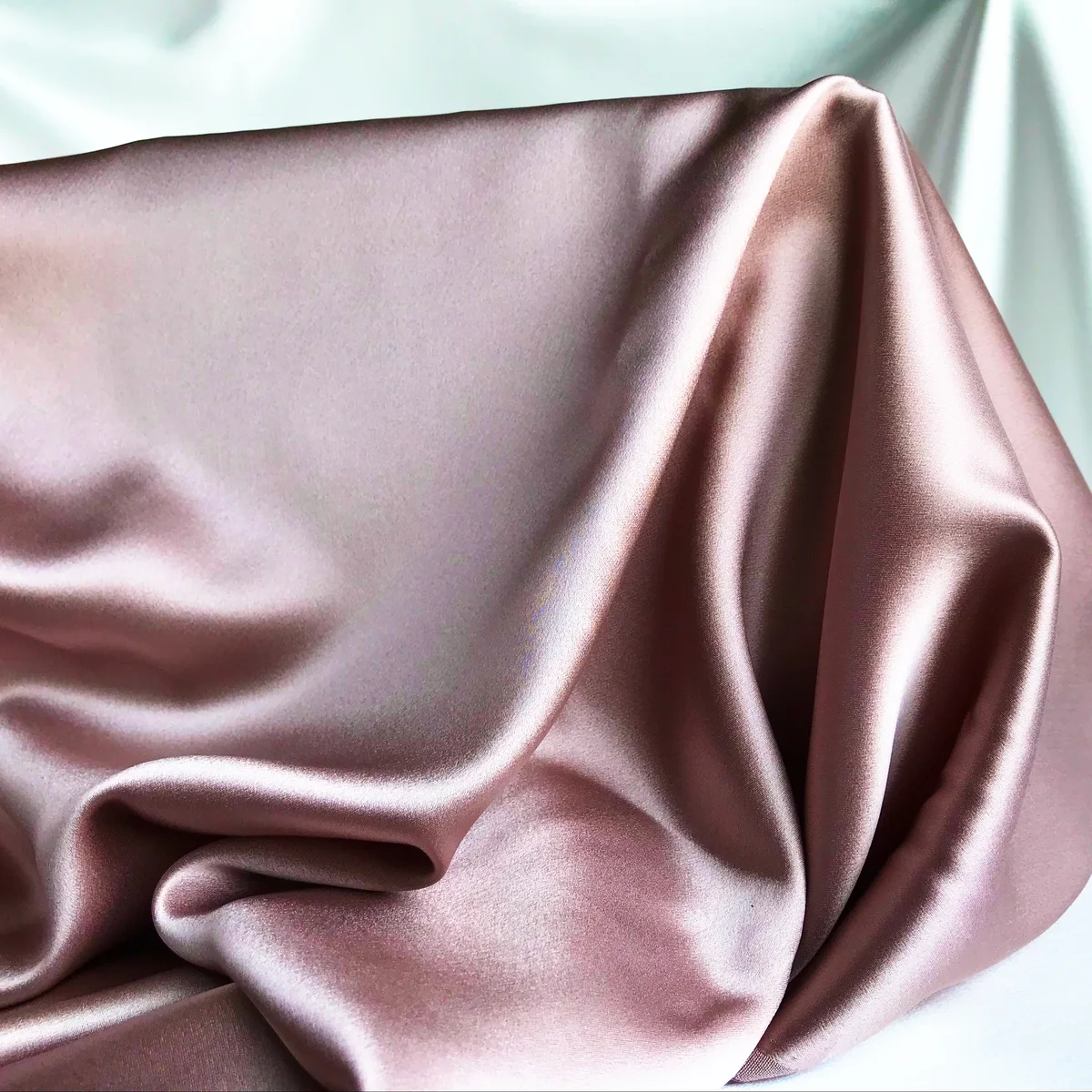
Core silk fabric supply for swatch review, sampling, and bulk material planning.
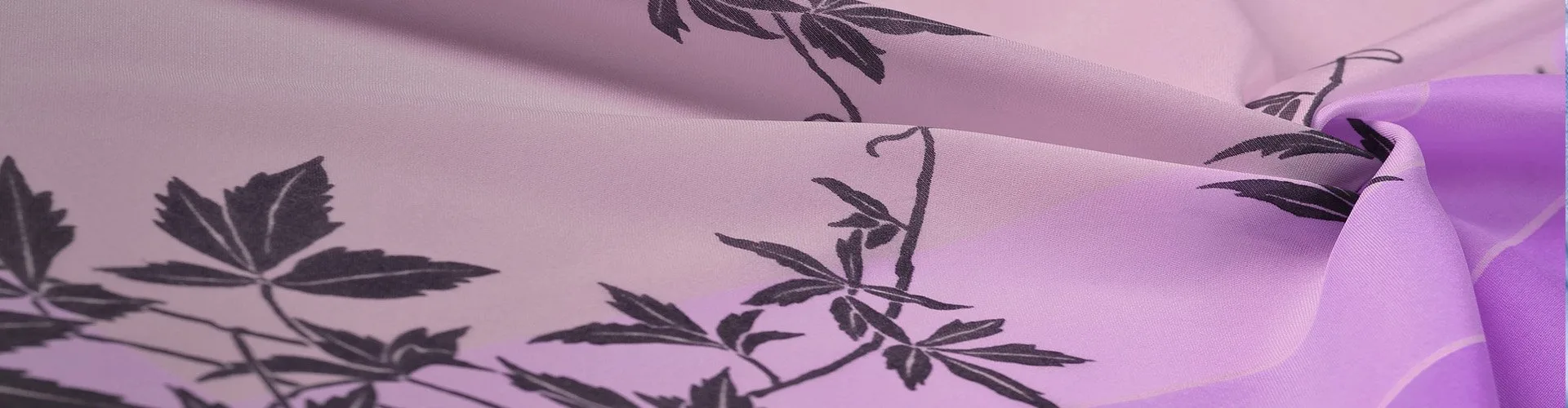
Bamboo-derived and silk–bamboo materials specified by exact composition, weave, GSM, shrinkage, pilling, care, and claim evidence.
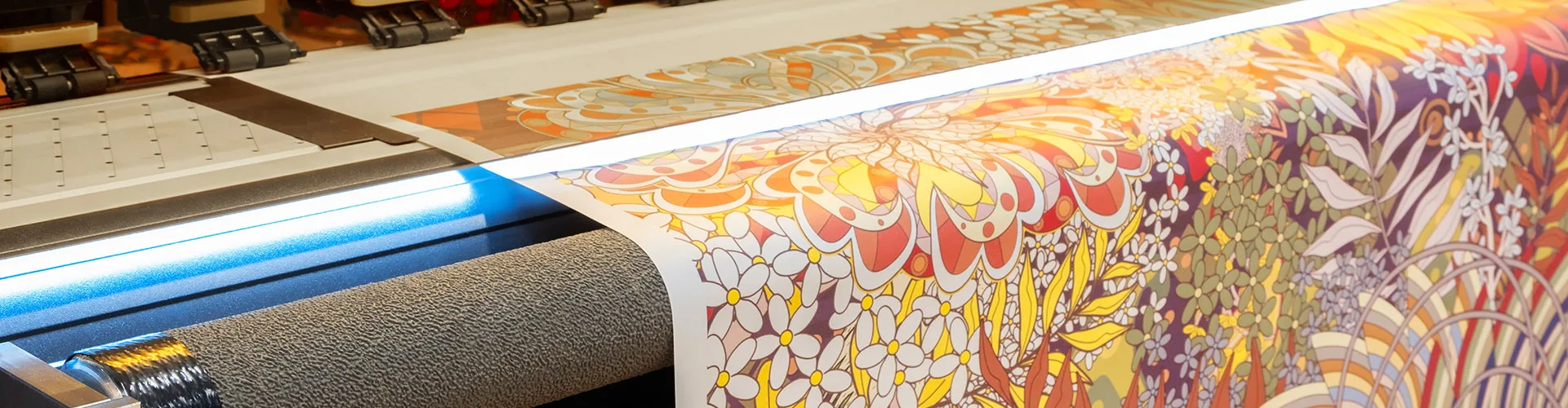
Printing and finishing programs developed around fiber chemistry, artwork, color approval, handfeel, fastness, care, and supported claims.
Start a development brief
Provide required fiber identity, weave, GSM, width, color, finish, product, care, tests, quantity, and target cost.